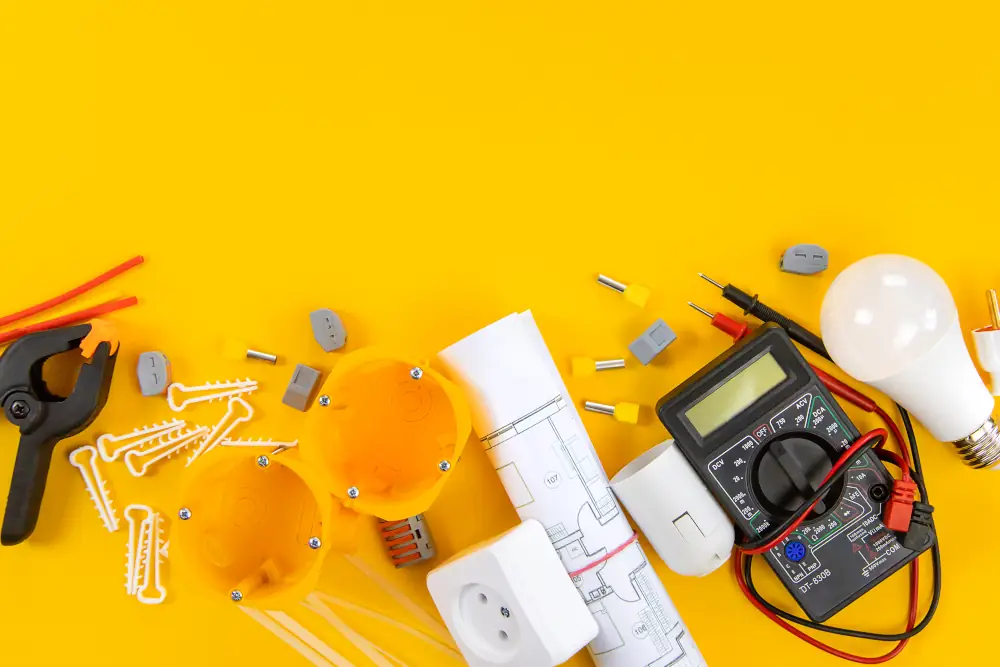
The Essential Elements of Home Electrical Systems
The home electrical system is primarily composed of five key components. Each plays a unique role in powering the household and ensuring its smooth functionality.
- The Electrical Service Panel: Often referred to as the breaker box or fuse box, this is where electricity from the local power company first enters the home. It distributes electricity via circuit breakers or fuses to different parts of the house. Each breaker or fuse is responsible for a specific area or appliance.
- Circuits and Wiring: These are the paths through which electricity travels in the home. Each circuit is a closed loop of wire that extends from the service panel to the outlets and fixtures it serves, then back. Most homes have a mix of 120-volt and 240-volt circuits.
- Outlets: Also known as receptacles, outlets are the points at which electrical appliances connect to the home’s electrical system. Different outlets are designed for different uses and can vary in the number of slots and shapes.
- Switches control the flow of electricity to lights and some types of appliances. By flipping a switch, one can turn on or off the flow of electricity, allowing control over which elements of the home are powered at any given time.
- Fixtures include lighting elements and hardwired appliances permanently connected to the home’s electrical system. They receive power from the circuits they are connected to.

